
It’s been a busy and eventful end to 2024, and 2025 started off marvelously with plenty of lab presentations at the Society for Integrative and Comparative Biologists meeting in Atlanta, Georgia. While I had to cancel my attendance and presentation due to a family emergency, five Ligocki Lab students attended and presented on their exciting work!
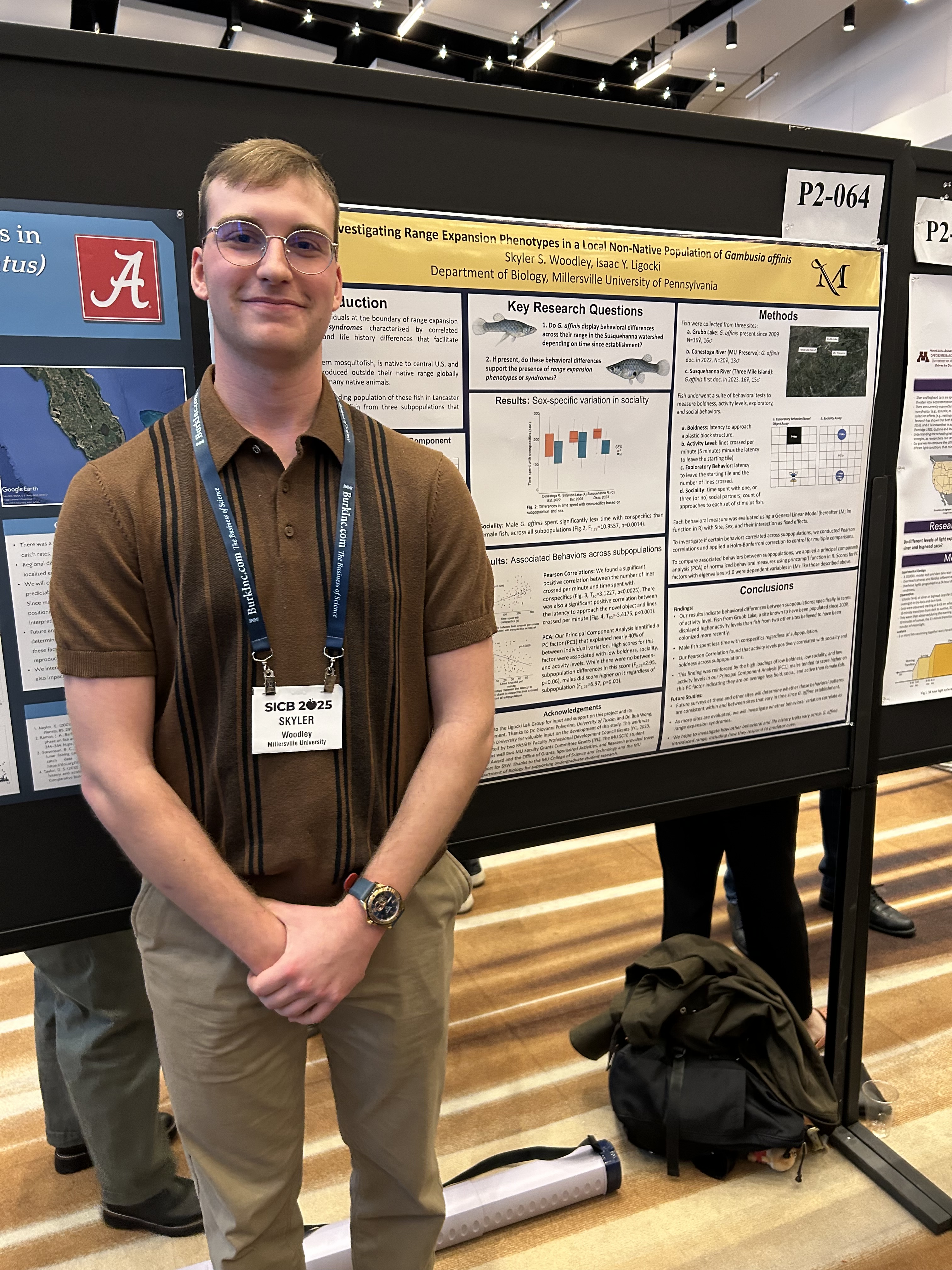
Range Expansion Phenotypes in introduced western mosquitofish (Gambusia affinis):
Skyler Woodley (2026) has taken the reigns of investigating behavioral variation across an introduced population of G. affinis in the Susquehanna River watershed. Skyler has tested the hypothesis that more recently established populations will differ phenotypically from longer established populations. Based on our findings to date, fish from a long-established site are more active than fish from more recently established populations. Looking ahead, we aim to evaluate more subpopulations in region, and continue common garden experiments to determine whether observed differences in wild fish are the result of selection or adaptation to the local environment. Findings from our initial study are currently In Review.
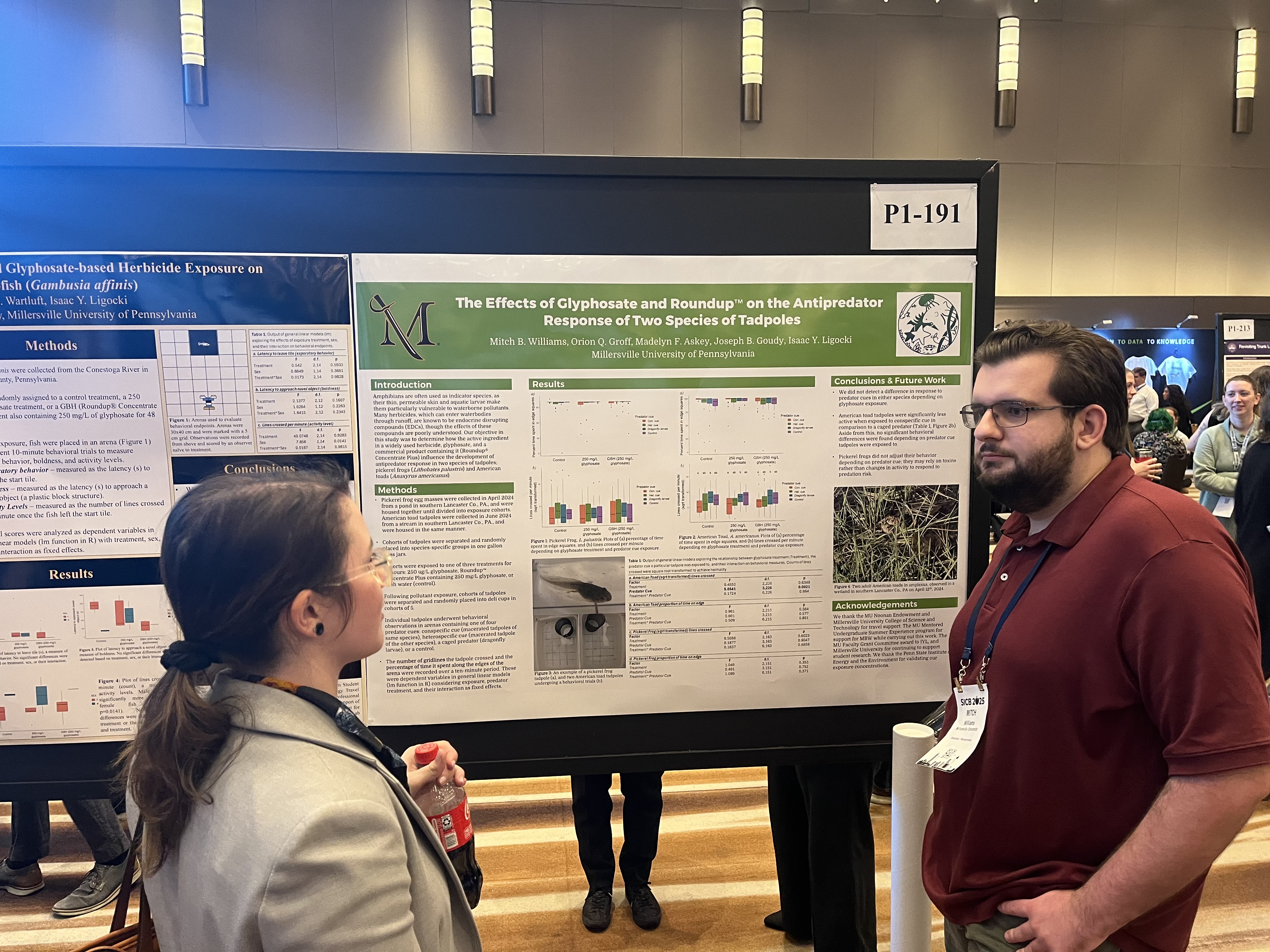
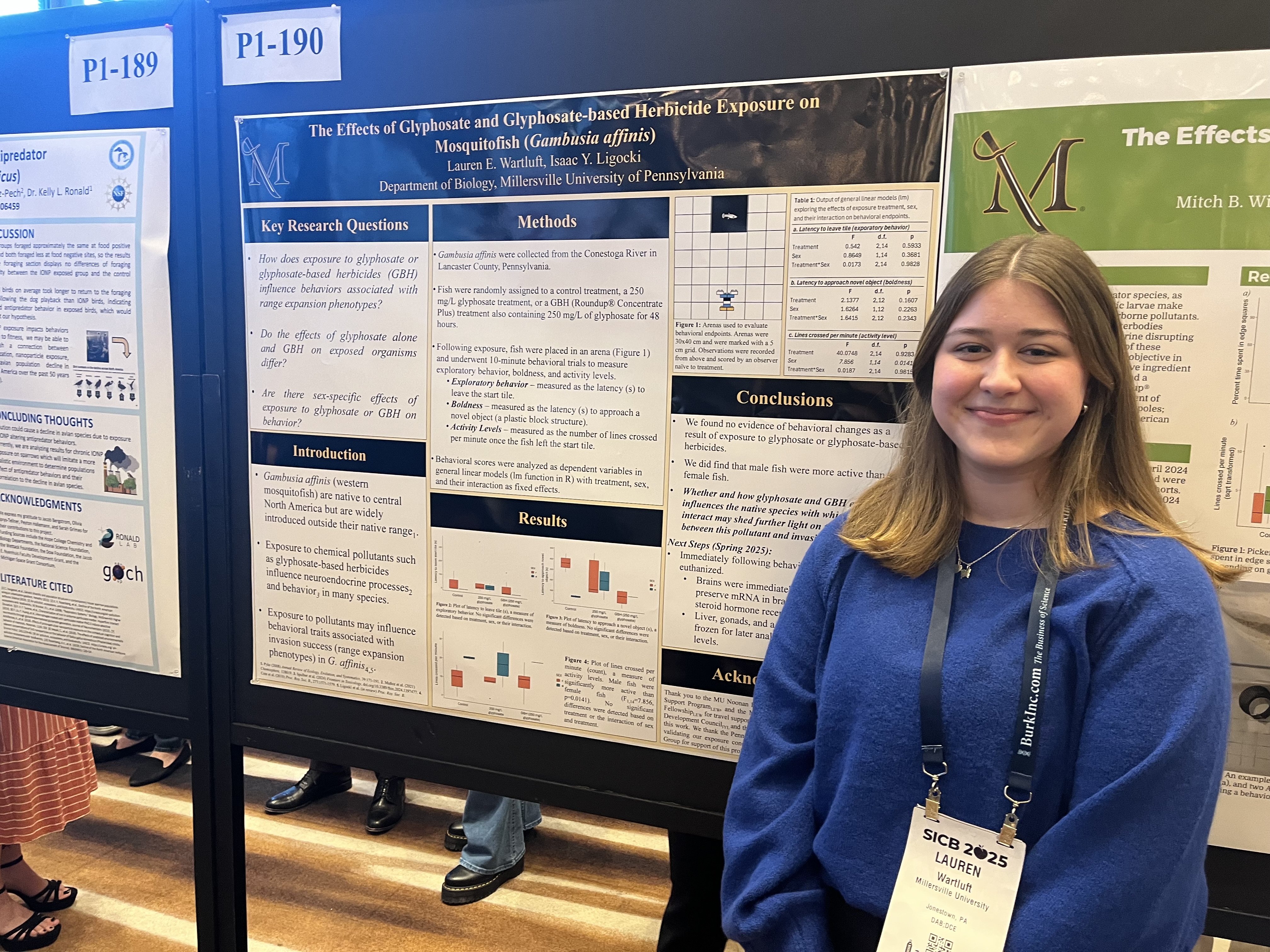
Effects of a widely used herbicide on larval amphibian and mosquitofish behavior:
Two students in the lab are investigating the effects of exposure to glyphosate and a commercial product containing it (glyphosate containing herbicide – hereafter GCH) on behavior and physiology. Mitch Williams (2025) exposed two species of larval amphibians (American toads, Anaxyrus americanus and pickerel frogs, Lithobates palustris) and measured their behavioral response to conspecific and heterospecific predator cue, as well as a live predator. Exposure to glyphosate or the GCH did not impact tadpole behavior in either species; Mitch is preparing to investigate whether exposure impacts metamorphosis or development as adults. Lauren Wartluft (2026) exposed mosquitofish to the same concentrations of glyphosate and the GCH. Lauren also found no behavioral differences, but will explore whether exposure impacted steroid hormone abundance and receptor abundance for her Honors thesis this spring.
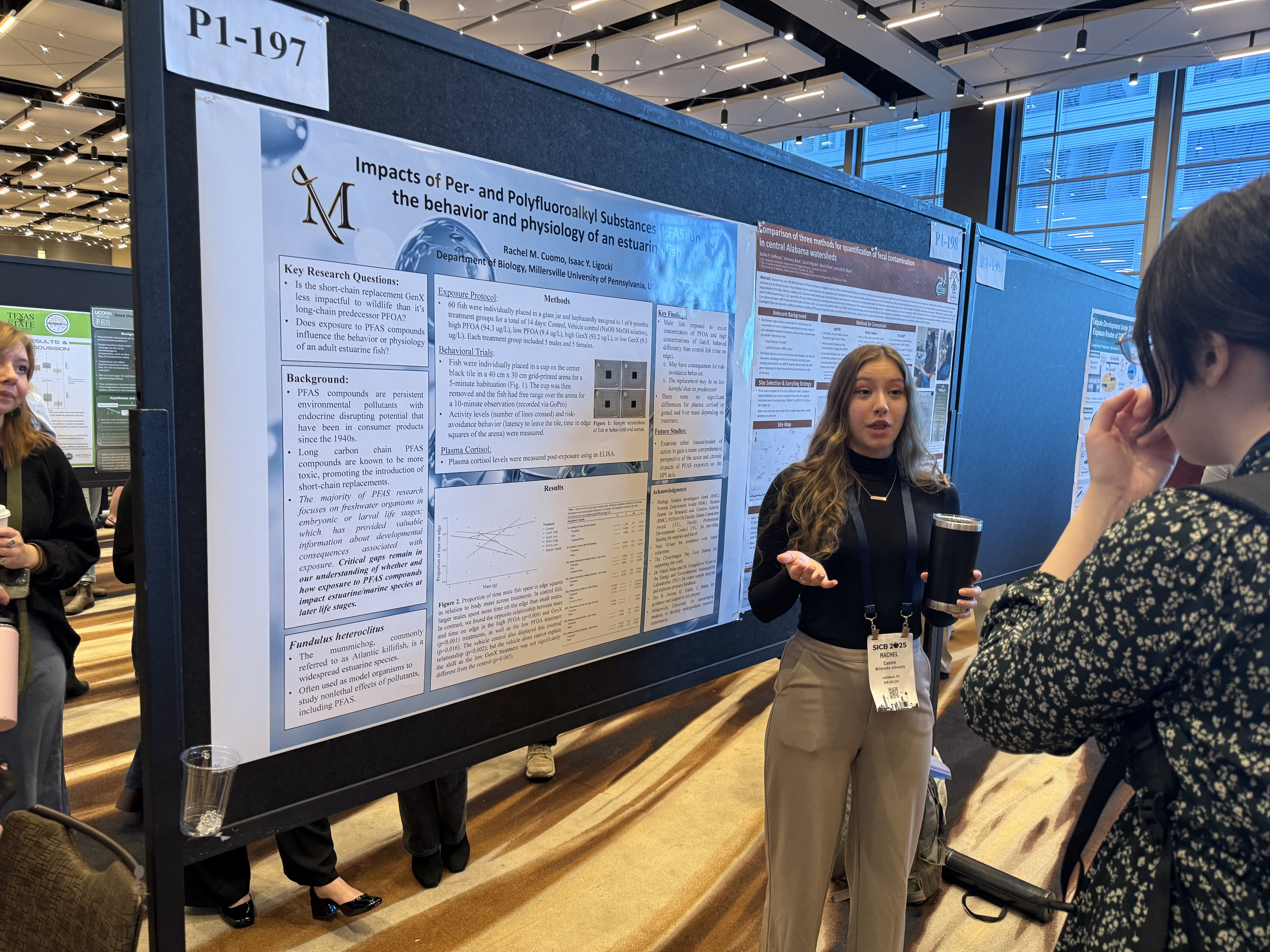
Impacts of PFAS exposure on an estuarine fish:
Rachel Cuomo (2024) investigated the impacts of exposure to two PFAS compounds (one now banned, the other an industrial replacement for the banned substance) on mummichogs, Fundulus heteroclitus. Aside from setting the gold standard of what an undergraduate thesis can be, Rachel found that both compounds influenced risk avoidance behavior in male (but not female) fish. Rachel is currently working for Eurofins in the PFAS lab honing her analytical chemistry skills, we plan to submit her thesis for publication in the coming weeks.
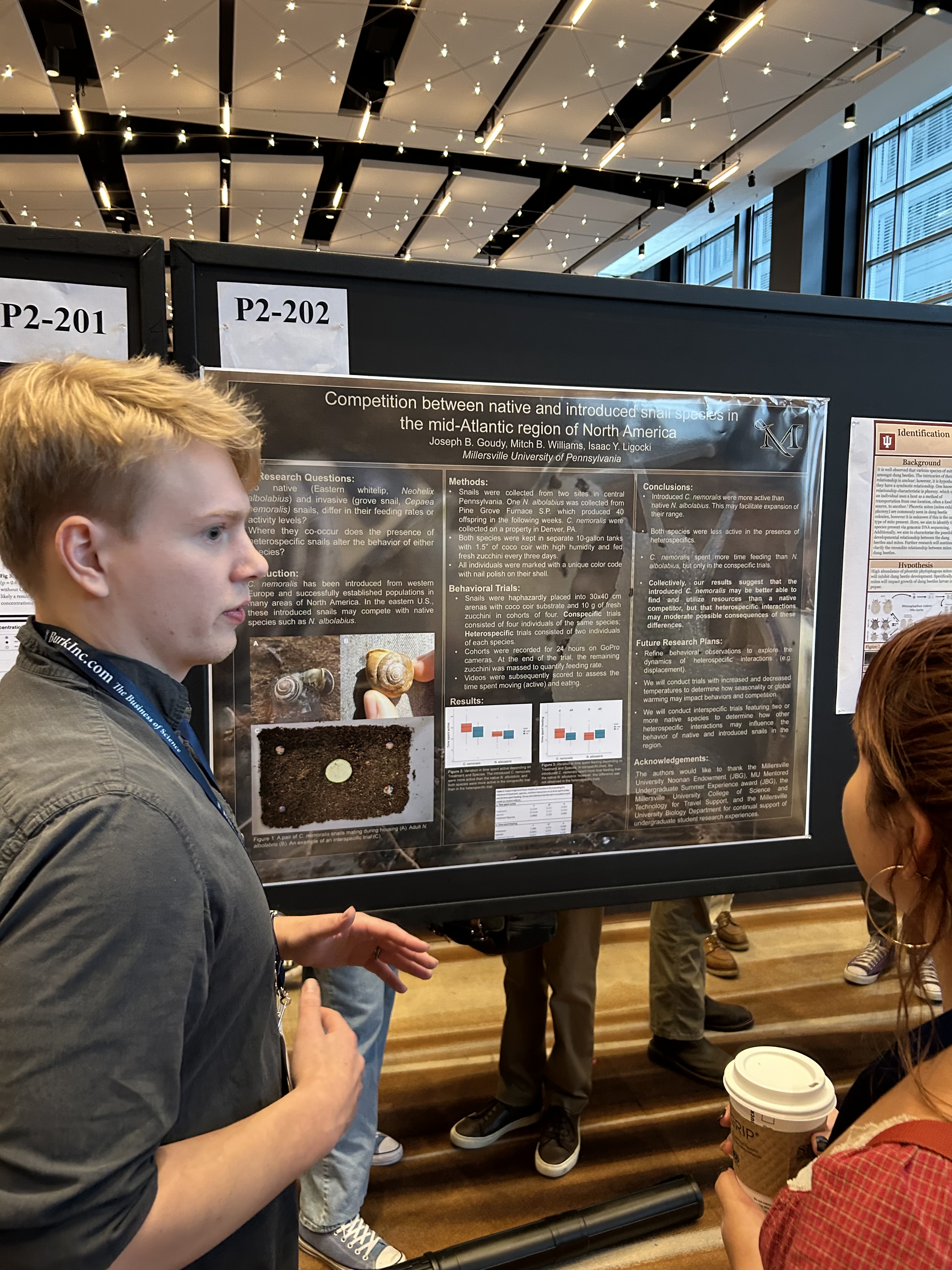
Competition between native and introduced land snails:
Joseph Goudy (2025) has embarked on an exciting project exploring how native and introduced land snails interact and aims to better understand how these interactions might impact the success of the nonnative Cepaea nemoralis in the eastern U.S. C. nemoralis is more active than its native counterparts, but both species were less active in the presence of conspecifics. As hoped, Joe got lots of constructive feedback on his work at SICB, and we’re excited to continue his work this spring.
 The Ligocki Research Group